
What Is Scientific Marketing?
A campaign shows strong click-through rates, the creative team feels good about the message, and the dashboard looks busy. Then revenue stalls. That gap is exactly where the question what is scientific marketing becomes useful. It separates activity from impact and replaces marketing by instinct with marketing by evidence.
Scientific marketing is the disciplined use of research, testing, measurement, and iteration to improve business outcomes. Not just campaign metrics, but outcomes that matter to the business – revenue, qualified pipeline, customer acquisition efficiency, conversion rate, retention, and margin. The core idea is simple: every meaningful marketing decision should be treated as a hypothesis that can be validated, rejected, or refined using data.
That sounds obvious. In practice, it is still rare.
Many organizations say they are data-driven when they are really reporting-driven. They collect dashboards, monitor platform metrics, and review channel performance, but they do not run a structured process for learning why customers convert, where friction appears, and which changes actually create lift. Scientific marketing is different because it is built around causality, not just observation.
What scientific marketing actually means
At its best, scientific marketing borrows the logic of the scientific method without pretending marketing is a laboratory. You start with a question. Why is paid traffic converting below category benchmarks? Why are high-intent users abandoning the checkout? Why does one market respond to an offer that fails in another language version? Then you form a hypothesis, define the variables, test the change, and measure the result.
The goal is not to make marketing mechanical. The goal is to make it accountable.
That matters because most commercial teams operate in environments full of noise. Seasonality affects demand. Sales teams change follow-up quality. Competitors shift pricing. Creative fatigue sets in. A good month can hide a bad strategy, and a bad month can punish a good one. Scientific marketing gives leadership a more reliable way to decide what deserves more budget, what needs fixing, and what should be stopped.
What is scientific marketing not?
It is not marketing run only by spreadsheets. It does not eliminate judgment, brand, or creativity. In fact, strong creative often performs better when it is developed inside a rigorous testing system because the team learns which messages, angles, and formats move real buyers.
It is also not an excuse to optimize trivial metrics. If a team runs endless tests on button colors while the offer is weak, the positioning is unclear, and the landing page ignores buyer objections, that is not scientific. That is just local optimization around a bigger strategic problem.
The standard is higher. Scientific marketing asks whether the work improves the customer journey and the economics of growth.
The core components of scientific marketing
Scientific marketing usually rests on four disciplines working together.
The first is research. That includes quantitative data from analytics, ad platforms, CRM systems, and funnel reports, but it also includes qualitative insight. Customer interviews, sales call reviews, on-site behavior patterns, support tickets, and survey responses often explain performance more clearly than channel metrics alone. Numbers show where the problem is. Research helps explain why.
The second is hypothesis building. Instead of saying, “We should redesign the landing page,” a scientific team says, “We believe conversion is low because the page does not answer risk-related objections early enough. If we move proof and decision support above the fold, conversion rate should increase among first-time visitors.” That level of precision improves both testing and learning.
The third is experimentation. A proper testing program isolates meaningful variables where possible and measures results over a sensible period. This might involve A/B tests, holdout groups, geo splits, creative rotations, funnel experiments, or segmented message tests across audiences and markets. The method depends on the traffic volume, sales cycle, and operational reality.
The fourth is iteration. Scientific marketing is cumulative. One test rarely changes a business by itself. The value comes from building a body of evidence over time so teams can make better creative, channel, and strategic decisions with less guesswork.
Why executives should care
For a leadership team, the appeal is not academic. It is financial.
When marketing decisions are made by opinion, seniority, or platform defaults, budget tends to leak slowly. Media spend climbs while conversion rates stay flat. Teams launch new campaigns before fixing weak pages. Agencies report engagement while acquisition costs rise. None of this looks disastrous in one week, which is why it persists for months.
Scientific marketing creates a tighter link between spend and business return. It helps teams identify whether the problem is traffic quality, message-market fit, offer structure, page friction, audience targeting, or post-click experience. That distinction matters because the fix for each one is different. More spend will not solve a weak value proposition. Better creative alone will not solve a confusing checkout.
For complex organizations, the value is even greater. Multi-market businesses, long consideration cycles, multiple stakeholders, and layered digital journeys create more opportunities for false assumptions. A disciplined testing and research system reduces the cost of being wrong.
What scientific marketing looks like in practice
In practice, scientific marketing is less glamorous than many agency presentations and far more useful.
It looks like mining customer language before rewriting ad copy. It looks like comparing new and returning users rather than averaging their behavior together. It looks like reviewing session recordings and funnel exits before redesigning pages. It looks like testing offer framing, proof hierarchy, and lead form friction instead of arguing about design preferences.
It also looks like making peace with inconvenient findings. Sometimes the campaign is not the problem. Sometimes the product promise is vague, pricing logic is weak, or internal stakeholders disagree on who the buyer actually is. Scientific marketing surfaces these truths faster, which is uncomfortable but commercially healthy.
At Artisan Marketing, this is the difference between producing marketing output and improving performance. The method starts with evidence, not assumptions, and follows that evidence through strategy, creative testing, conversion work, and channel decisions.
The trade-offs and limits
A scientific approach is powerful, but it is not magic.
First, it requires enough signal to learn from. If traffic volume is low, test design has to be more selective and patient. Some organizations cannot run high-frequency experiments across every part of the funnel, so they need sharper prioritization.
Second, not every decision can wait for perfect validation. Brand shifts, category entry, and major positioning choices often involve judgment under uncertainty. The point is not to remove judgment. The point is to support it with the best available evidence and then measure the downstream effect.
Third, bad measurement can create false confidence. If attribution is weak, tracking is inconsistent, or KPIs are disconnected from revenue quality, a team can look scientific while optimizing noise. Discipline matters as much as tooling.
This is why mature teams treat marketing science as a management system, not just a test calendar.
How to know if your company needs more scientific marketing
Most companies do, but some signs are especially clear.
If channel performance changes and nobody can explain why, you have a learning problem. If creative debates are settled by opinion rather than evidence, you have a process problem. If your reporting is full of activity metrics but thin on commercial impact, you have a measurement problem. And if each agency or internal team works in a silo, with little shared understanding of the customer journey, you have a strategy problem.
Scientific marketing helps unify those issues because it forces alignment around hypotheses, evidence, and business outcomes.
That does not mean every company needs a massive experimentation program tomorrow. Often the right first step is narrower: clean up tracking, identify the highest-friction point in the funnel, mine customer objections, and run a few well-designed tests tied to revenue or lead quality. Small disciplined improvements compound faster than broad unfocused activity.
A better standard for marketing decisions
The real value of scientific marketing is cultural. It changes how teams think. Instead of asking what they want to launch next, they ask what they need to learn next. Instead of defending assumptions, they try to disprove them. Instead of celebrating motion, they measure contribution.
That shift is especially valuable for leaders under pressure to justify spend, improve conversion performance, and create repeatable growth across channels and markets. It brings marketing closer to the standards already expected in finance, operations, and product.
If your team keeps producing work but not enough certainty, that is the moment to raise the standard. Better marketing usually starts with a better question, tested honestly and measured against outcomes that matter.
About Artisan

Gold Effie 2016
Artisan just won a Gold Effie Award! Our campaign for Szallas.hu was the most efficient in travel & tourism category this year.

Silver Effie 2017
In 2017, one of Szallas.hu biggest competitors, Agoda.com spent 10x in Hungarian media, than Szallas.hu. And still, Szallas.hu could reach higher brand awareness with a more efficient campaign that we helped to design and execute based on a tremendous amount of research and testing.
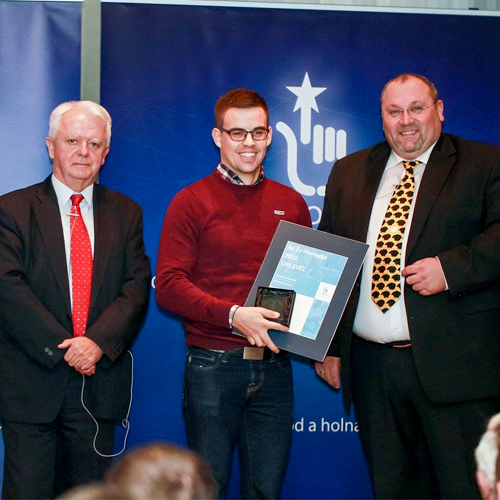
Website of the year 2015
Our newsletter was the best in 2015! The Hungarian Marketing Association give to us the best electronic newsletter of the year award, for our newsletter made to McDaniel College Budapest.

Video of the year 2015
The Hungarian University and Press Association awarded the most talented student journalists, photographers and video makers. Our image video for McDaniel College won best higher education video of the year award.
Works
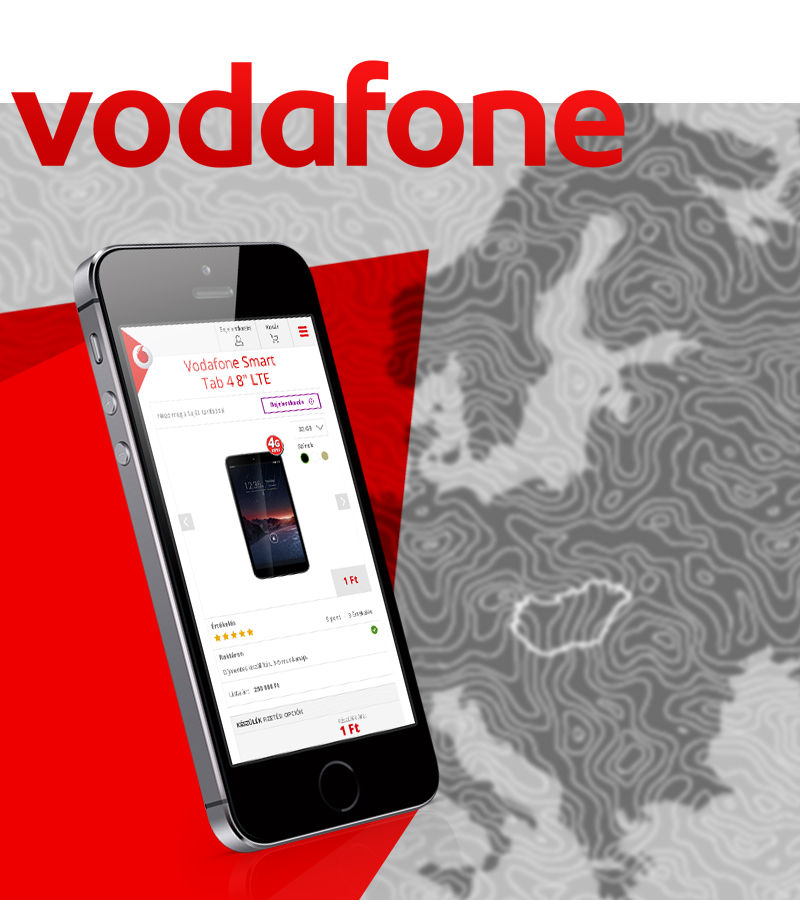
Vodafone Product Page
- Why you should dramatically reducing the steps between your landing and your users' goal
- See the importance of the responsive design
- How we have sticked to branding guideline
- Includes before-and-after images of product pages

Vodafone Family
- How to steer users from a simple online calculator to complete their purchase in the offline shops
- Why you shouldn’t assume that your customers want to puzzle out complex informations
- The importance of hierarchy and comprehensive icons
- Includes before-and-after images of the landing page

Szallas.hu Campaign
- How to test offline campaigns in advance?
- Specific creative tests we have tried

Piano Guys Concert
- What is common in classical music and popular music? And how we were able to launch a successful campaign in 2 months and help to reach the main task: to make a positive impact in the lives of people?
- Here’s our step-by-step guide of what we exactly did!

McDaniel College
- This american college in Hungary needed to increase the number of their students with recoverable costs.Through market research, surveys, interviews and USP testing, we found the solution.
- Click to see how!

